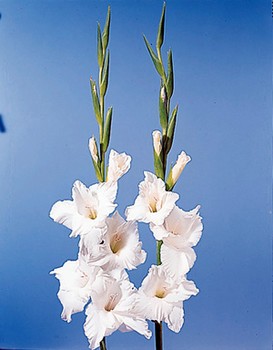
Botanical Name :
Rosa spp. and hybrids
Common Name :
Rose, Hybrid Tea, Sweetheart, Spray Roses
Product Use :
Cut Flower
Pronunciation :
ROW-za
Family Roots :
The most famous member of the Rosaceae (rose family). Native to the temperate Northern Hemisphere. Common relatives include almond, cherry, apple, raspberry, spirea, cotoneaster, firethorn, hawthorn, service-berry, quince, blackberry, Geum, prune, plum and pear.
Personality :
Flowers with many (~40-60) petals, 2-6 inches across at ends of stems or branchlets. Stems thorny, leafy, cut generally to 18-36 inches long. Plant is a deciduous shrub, classed as a dicotyledon. Flower fragrances go from none to various such as tea-like, spicy, musky, fruity or citrus.
Availability :
Year-round.
Flower Color :
Many including white, pink, yellow, orange, red, lavender and lots in between.
Decorative Life :
From 4-16 days.
Ethylene Sensitivity :
Varies
Ethylene Comments :
Some cultivars are sensitive to ethylene, with premature petal fall of malformed flowers the result. Therefore, one may want to treat with an anti-ethylene product.
Post HarvestCare Opportunities :
Remove bottom leaves if present, recut stems under water and place into a hydration solution followed by flower food or directly into a fresh flower food solution. In very recent research (Reid, et al., 1998), it was shown that using a hydration solution is not an advantage and that roses can be placed and stored in flower food solution for best overall results. Consider testing postharvest fungicide dips or sprays if Botrytis is a continuing problem. One recommended dip treatment is using Ornalin-50WP at 1.5-3.0 pounds per 100 gallons of water or Phyton-27 at 10-12.5 ounces per 100 gallons of water. Some cultivars respond well to the addition of a wetting agent, especially if they are to be (or were) dry stored. One wetting agent that works well is Agral-LN as well as many types classified as alkylethoxylates. The presence of hooks will only reduce flower life if held in water. The highest flower respiration rate is before the flowers are harvested, when the calyx is reflexing away from the flower bud. Using flower foods can help overcome some of the negative effects of chemicals leaching out of rose leaves when they are below the water line in vases and buckets. Botrytis fungal infection appears as brown blotches on petals or fuzzy gray patches on stems or leaves. To reduce chances of infection, maintain relative humidity below 94% and keep foliage and flowers dry. It is also important to know that some cultivars are less susceptible to Botrytis such as 'Escimo', 'Sugar Baby', 'Frisco', 'Mercedes', 'Lambada' and 'Tina'.
Storage Specifics :
Best at 32-34F, wet or dry for 1-2 weeks. When 'Ambiance' was held wet or dry between 32 and 50F, no difference in vaselife was noted between wet and dry at a given temperature. However, there was an advantage for wet holding when held at 55F. Therefore, dry storage/transport is recommended unless exposure to high temperatures (>40F) is possible. Controlled atmosphere (low oxygen and/or high carbon dioxide) storage of 'First Red' either was of no benefit or was detrimental
Preharvest &Harvest Factors:
Harvesting flowers just one day too soon can result in ~37% less water going through the region right below the flower thus greatly increasing the chances for bent neck. Cultivar and root stock decision can greatly influence postharvest characteristics. If irrigation water is used that is at a lower temperature than the production air temperature, stomata development can be altered and thereby result in flowers that do not last as long a vaselife compared to plants irrigated with water at or above the production air temperature. Flowers produced under warmer night temperatures (~63F) opened better after harvest than those grown cooler night (~55F) night temperatures. Flowers grown in greenhouses with air movement of 30 feet (9.1 meters) per minute or more will develop about half the Botrytis infection compared to no air movement. At about 18 feet (5.5 meters) per minute infection is reduced by about 15%. The vaselife of 'Garnette', 'Zorina' and 'Bacarra' decreased as growing temperatures decreased. The best vaselive was obtained when flowers were grown at 70-75F. Vase solution uptake is improved for warmer grown flowers. For example, roses grown at 75F took up about twice as much vase solution as ones grown at 54F. Roses grown under low temperatures can have more chemicals in their leaves that can reduce flower live when they leach out of leaves that are below the water line in vases or buckets compared to roses grown at higher temperatures.
Tidbits :
Cut flowers sold in several forms: hybrid tea (large, one flower per long stem), sweetheart (smaller, one flower per shorter stem), spray (several small flowers on branched stem). Even in the Middle Ages, when most plants were grown solely for practical or medicinal purposes, the rose was cultivated for its beauty alone. Yet, the rose "hip" or flower base has been known for many years as a source for vitamin C. Today there are hundreds of rose cultivars. With names like "Ingrid Bergman," "Movie Star," "Lipstick", "Sexy Rexy" and "Vogue," we are reminded of what the image of the rose evokes feelings of romance, passion, enchantment and fascination. You cannot go wrong making a loving statement with roses. The American Academy of Allergy, Asthma and Immunology lists this species as an allergy-safe pollen producing plant. According to Creasy (1999), fresh petals are edible. Can be used in jellies, rose water, vinegars, honey, syrups, salads and sorbets. Rose cultivars are often known to consumers because this is nearly the only flower sold by florists that retain their cultivar names. Common ones include Madame Delbard and Visa (red), Osiana (peach), Aalsmeer Gold (yellow), Eskimo (white), Tango and Mercedes (orange) and Peckabo and Sonia (pink). More non-red cultivars should be marketed based on consumer research. Problems and cultivar examples include bent neck (Cara Mia), improper opening due to ethylene (Royalty) or too many petals (Classy), petal drop due to ethylene (Lovely Girl), breaking at upper leaf node (Visa), petal blackening (Royalty) and entire flower fall (Osiana).
See More at Hoogasian Flowers Birth Month Flowers:
http://www.hoogasian.com/BirthMonthFlowers.html